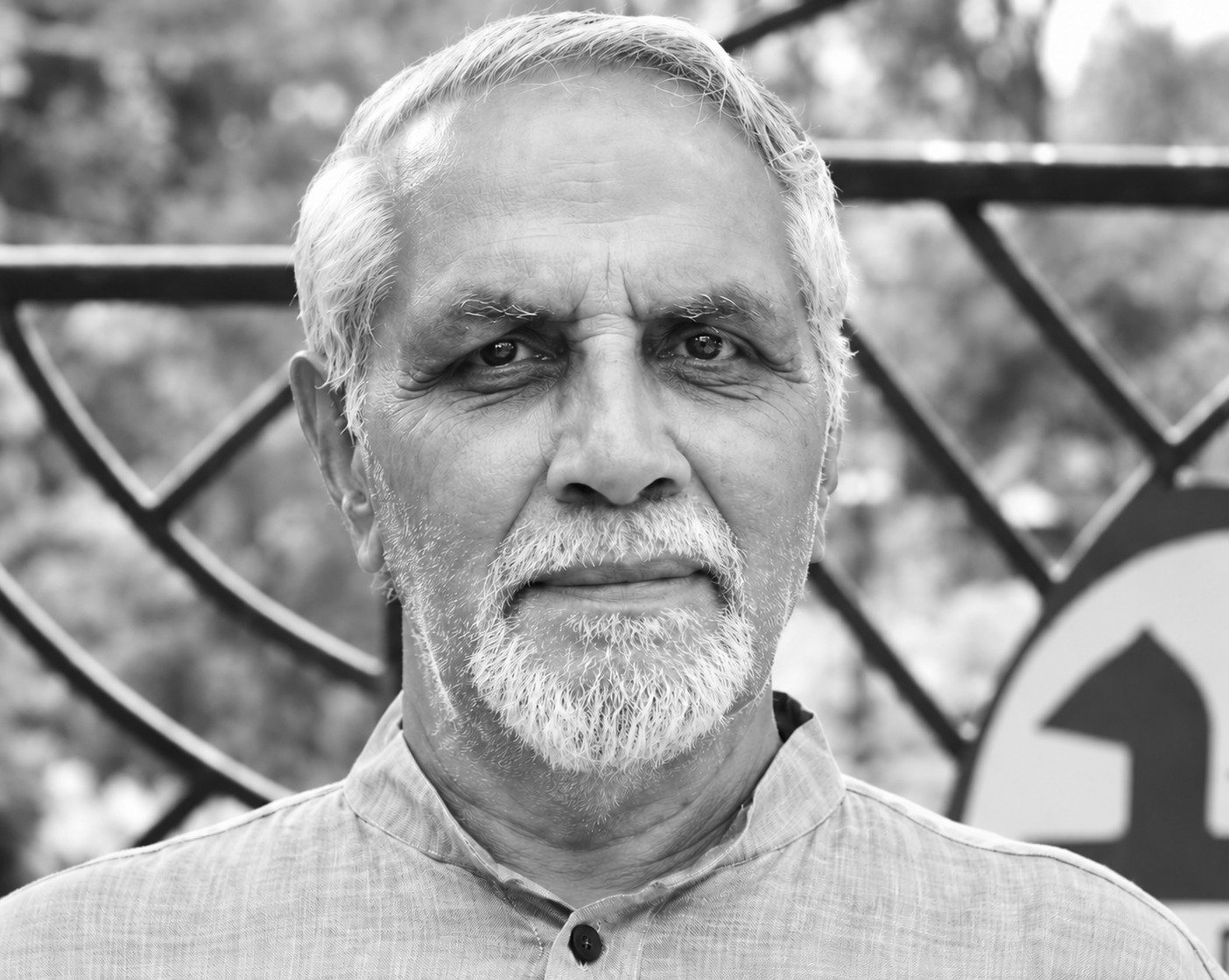
TRPF Tribute | Chidambara Rao Jambe (1949-2026): A Life Devoted to Theatre, Training and the Democratisation of the Stage
TRPF pays tribute to Chidambara Rao Jambe (1949–2026), distinguished theatre director, teacher, cultural administrator and NSD alumnus whose remarkable career connected Ninasam, Rangayana, NSD Bengaluru and India’s regional performance traditions.
The Rameshwar Prem Foundation (TRPF) pays respectful tribute to Chidambara Rao Jambe, distinguished theatre director, teacher cultural administrator and alumnus of the National School of Drama (NSD), New Delhi, who passed away on 12 September 2026, aged 77. Reports from Karnataka state that Jambe died on Saturday at his residence in Heggodu Village, Sagara Taluk, Shivamogga district, leaving behind his wife and son. His death closes an important chapter in modern Kannada theatre: one that connected institutional theatre training with folk and traditional performance, rural and cultural practice, classical dramaturgy and contemporary social concerns.
Chidambara Rao Jambe was born on 3 January 1949 at Adderi village in Sagara taluk of present-day Shivamogga district, Karnataka. His formative education took place in Keladi and Sagara, a region whose cultural environment was deeply connected with Karantaka’s living performance traditions. Before entering formal modern theatre training, Jambe spent a year studying Yakshagana in Udupi. This early encounter with the highly codified movement, music, costume, rhythm and visual grammar of Yakshagana was significant: throughout his later career, he remained interested in the possibilities created when indigenous performance traditions entered into conversation with classical dramatic literature and modern theatre practice.
In the early 1980s, Jambe entered the National School of drama in New Delhi, where he received professional theatre training. Available biographical accounts identity him early as an NSD alumnus, although publicly accessible sources do not consistently specify his exact graduating batch; it is therefore more accurate to place his NSD education in the early 1980s rather than assign an uncertain year. At NSD he encountered the rigorous discipline of actor training, stage design, direction, dramaturgy and the comparative study of Indian and world theatre that had become central to the School’s pedagogy. His later career demonstrated how completely he absorbed his plural theatrical education while continuing to work from within the cultural vocabulary of Karnataka.
A decisive part of Jambe’s professional life was his association with Ninasam at Heggodu, one of India’s most remarkable rural cultural institutions. He served for approximately twenty-two years as Principal of the Ninasam Theatre Institute, becoming not simply an administrator but a major theatre pedagogue. Generations of performers, directors and theatre workers passed through an environment in which Jambe helped make theatrical education a sustained cultural practice rather than merely professional training. By the time he was appointed to lead Rangayana in 2004, contemporary reports already described him as having served at the Ninasam Theatre Institute for twenty-two years.
His work at Ninasam also placed him close to the intellectual legacy of K.V. Subbanna and to the influential Tirugata. Ninasam’s travelling repertory. Jambe directed an exceptionally wide range of dramatic literature of the repertory. Among productions documented from this period are Girish Karnad’s Taledanda, Maxim Borky’s The Lower Depths, adapted in Kannada as Ee Kalaginavaru, a sequence of plays by the Sanskrit dramatist Bhasa presented as Bhasa Bharata, the Shakespeare’s Timon of Athens, stage in Kannada as Athensina Arthavantha. Ninasam’s records also document his direction his direction of works including loka Shakuntala and Vigada Vikrama Charita.
This range is revealing. Jambe did not construct his theatre around a rigid opposition between the ‘traditional’ and the ‘modern.’ Instead, his body of work moved continuously between Sanskrit Drama, Shakespeare, Chekov, Brecht, modern Kanadda writing, folk narratives and indigenous performance vocabularies. Later accounts credit him with directing more than one hundred productions in Kannada, Hindi and other languages. Titles repeatedly associated with his directorial career include Taledanda, Cherry Hannina Thota (The Cherry Orchard), Chanakya Prapancha, Puntila, Loka Shakuntala and Athensina Arthavantha. His theatre could therefore be understood as an ongoing investigation into how dramatically different texts and traditions could be embodied within the cultural and performative conditions of contemporary India.
A particular illustrative production is Lika Shakuntala, based on K.V. Subbanna’s reworking of the Shakuntala narrative. Jambe’s production employed a theatrical language influenced by Yakshagana, incorporating highly articulated movement, music and costume while simultaneously examining the contrasting cultures of forest hermitage and royal court. Documentation of the production credits movement design to Sanjeeva Suvarna and Kalamandalam Prasobh and identifies Jambe as its director. Here, his early Yakshagana training became not an ornamental addition to a modern play, but part of the structural vocabulary through which classical narrative could be reinterpreted for a contemporary audience.
Jame’s engagement with theatre was equally significant because of its social reach. He participated in Ninasam’s Janaspandana initiative and worked with members of Karnataka’s Siddi community, directing the production Kappu Jana, Kempu Neralu. Earlier reporting similarly notes that he directed theatrical work with Siddi performers at Machikere. Such projects extended theatre outside the metropolitan or professionally institutional stage and situated performance within communities that had historically remained marginal to India’s mainstream cultural establishment. This aspect of his career is important to understanding Jambe not only as an accomplished stage director but as a practitioner who regarded theatre education and participation as forms of cultural democratization.
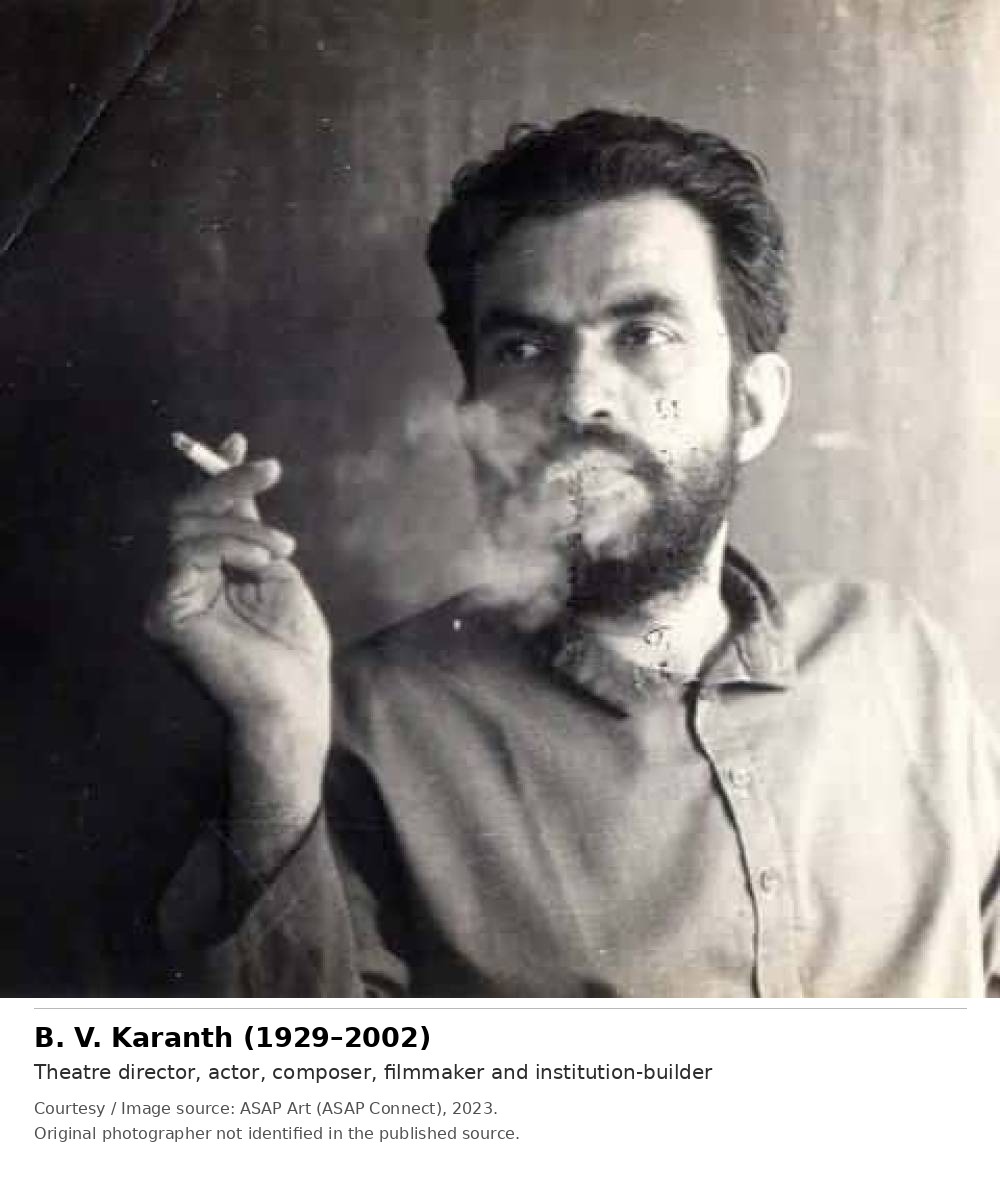
In January, 2004, Jambe was appointed Director of Nataka Karnataka Rangayana, Mysuru, the state-supported professional repertory founded under the leadership of B.V. Karanth. Contemporary reporting records that he succeeded Prasanna. His tenure is documented as extending from 2004 to 2006. At the time of his appointment Jambe articulated as strikingly decentralized vision of Rangayana: he argued that the institution should not restrict itself to Bengaluru and Mysuru but should travel to places such as Belagavi and Vijayapura, conduct theatre activity and workshop with schools, colleges, teachers and local theatre groups, and make communities feel that the publicly funded repertory belonged to them. That statement encapsulates a consistent principle running through his career—the theatre institution was meaningful only when it entered into dialogue with society.
As Director of Rangayana he continued a lineage that included B.V. Karanth, C. Basavalingaiah and Prasanna, while developing his own emphasis on outreach, training and repertory culture. Archival documentation from the Sangeet Natak Akademi records, for example, Rangayana’s Kannada presentation of Vikramorvashiyam under Jambe’s direction at a theatre festival in Tezpur, Assam, on 2 November 2006. Such touring activity placed Kannada theatre within wider national circuits rather than treating it as a geographically contained regional form.
Following his Rangayana years, Jambe continued to combine direction with institution-building and pedagogy. By 2010 he was documented as Diector of the Ranga Prayoga Shala at Sanehalli in Chitradurga district, where a residential diploma programme provided training in theatre arts. He subsequently served as the ehad/director of the National School of Drama’s Bengaluru Centre; a 2014 Sahitya Akademi record identifies him as Director of the NSD Regional Office Bangaluru, while contemporary theatre reporting also describes him as the Centre’s director and an NSD alumnus. His career thus formed an unusual institutional arc linking NSD in New Delhi, Ninasam in Heggodu, Rangayana in Mysuru, Snehalli and NSD’s Bangaluru Centre.
His connection to NSD also continued long after his own student years. In the 2016-17 academic session, students of the NSD Bengaluru Centre performed the Sanskrit drama Seetha Swayamwara under his direction, working on voice, costume, music, scenography and translation before presenting it publicly at Guru Nanak Bhavan, Bengaluru. In 2017 he conducted a production-oriented workshop in Chennai with second-year NSD students based on Therukoothu, resulting in the Hindi production Vidisha Ka Vidhushak, it was subsequently performed in Chennai and at Abhimanch, National School of Drama, New Delhi. Even as late as October 2024, the NSD Bengaluru Centre records Jambe guiding a student demonstration related to Chekov’s Three Sisters. These records suggest that teaching was not a supplementary dimension of his career—it remained one of its defining commitments until his later years.
Among Jambe's later acclaimed works was Shivarathri, written by Chandrashekhara Kambara and produced by Mysuru's Niranthara Foundation. The production engages with the radical twelfth-century social movement associated with Basavanna and the challenge posed by the Sharana movement to caste hierarchy. Jambe's direction was noted for transforming the historical material into an urgent contemporary theatrical experience. The Sangeet Natak Akademi's records show that Shivarathri was presented at LTG Auditorium, Copernicus Marg, New Delhi, on 29 October 2015, during the festival associated with the Akademi's 2014 Fellowships and Awards.
Recognition of Jambe's work came over several decades. He received the Karnataka Nataka Academy Award in 1994. In 2003, the Kerala Sangeetha Nataka Akademi honoured him in connection with the National Theatre Festival. His contribution to direction received national recognition when he was chosen for the Sangeet Natak Akademi Award for 2014. He was later among the theatre personalities selected for the Karnataka Rajyotsava Award in 2023. These honours are significant, but Jambe's larger achievement lies in the continuity of the work that produced them: directing, teaching, mentoring, travelling with theatre and sustaining institutions through which new generations could encounter the stage.
His directorial career also resists simple classification. Jambe's movement from Taledanda to Chekhov, from Shakespeare to Kambara, from Sanskrit theatre to Therukoothu and Yakshagana demonstrates an understanding of Indian theatre as a field of encounters rather than a single aesthetic tradition. Indigenous forms in his productions were not necessarily nostalgic returns to a supposedly untouched past; they functioned as active theatrical vocabularies capable of engaging classical texts, modern dramaturgy and present-day social realities. At the same time, his long years as a teacher ensured that such experimentation was transmitted through training and practice rather than remaining confined to individual productions.
This is perhaps why his institutional work deserves to be considered alongside his better-known achievements as a director. At Ninasam, Jambe participated in one of India's most influential experiments in decentralised cultural education. At Rangayana, he advocated taking a publicly supported repertory beyond its urban base. At Sanehalli and NSD Bengaluru, he helped shape formal theatre pedagogy. Through work with communities such as the Siddis, he demonstrated that theatrical practice could extend beyond already established cultural constituencies. His life linked the rehearsal room, theatre school, touring repertory, village, classroom, national institution and professional stage.
Remarkably, Jambe remained artistically active into his final years. NSD Bengaluru's records document his work there in 2023 and 2024, and in January 2026, only months before his death, a production of Nammolagobba Gandhi directed by him was being presented by Rangayana Shivamogga in Belagavi. His was therefore not merely the legacy of a director remembered for an earlier period of Kannada theatre; it was the career of a practitioner who continued participating in the theatre ecology well into his seventies.
The death of Chidambara Rao Jambe on 12 September 2026 represents a profound loss to Indian theatre. Karnataka Chief Minister Siddaramaiah, while mourning him, described Jambe as a noted theatre director, theatre teacher and progressive thinker who had devoted his life to artistic service, recalling in particular his leadership at Ninasam, Sanehalli and Rangayana. That assessment points to the breadth of his contribution. Jambe belongs to a generation for whom theatre was not simply a succession of productions; it was an intellectual discipline, a pedagogical responsibility, an institution to be nurtured and a means through which communities could encounter one another.
For The Rameshwar Prem Foundation, remembering Chidambara Rao Jambe is also an occasion to acknowledge a larger tradition of Indian theatre practitioners who moved continuously between writing, direction, teaching, regional performance traditions, repertory theatre and cultural institution-building. His journey from Adderi and Sagara to Udupi, New Delhi, Heggodu, Mysuru, Sanehalli, Bengaluru and stages across India demonstrates how profoundly India's national theatre has been shaped by practitioners grounded in regional languages and local performance cultures.
TRPF pays homage to Chidambara Rao Jambe (3 January 1949 – 12 September 2026)—director, teacher, cultural administrator and one of the significant bridge-builders between India's traditional performance heritage and its modern theatrical imagination. His productions will remain part of theatre history; his deeper legacy survives in the artists, students, institutions and communities through whom his understanding of theatre continues to live.
Chidambara Rao Jambe was born on 3 January 1949 at Adderi village in Sagara taluk of present-day Shivamogga district, Karnataka. His formative education took place in Keladi and Sagara, a region whose cultural environment was deeply connected with Karantaka’s living performance traditions. Before entering formal modern theatre training, Jambe spent a year studying Yakshagana in Udupi. This early encounter with the highly codified movement, music, costume, rhythm and visual grammar of Yakshagana was significant: throughout his later career, he remained interested in the possibilities created when indigenous performance traditions entered into conversation with classical dramatic literature and modern theatre practice.
In the early 1980s, Jambe entered the National School of drama in New Delhi, where he received professional theatre training. Available biographical accounts identity him early as an NSD alumnus, although publicly accessible sources do not consistently specify his exact graduating batch; it is therefore more accurate to place his NSD education in the early 1980s rather than assign an uncertain year. At NSD he encountered the rigorous discipline of actor training, stage design, direction, dramaturgy and the comparative study of Indian and world theatre that had become central to the School’s pedagogy. His later career demonstrated how completely he absorbed his plural theatrical education while continuing to work from within the cultural vocabulary of Karnataka.
A decisive part of Jambe’s professional life was his association with Ninasam at Heggodu, one of India’s most remarkable rural cultural institutions. He served for approximately twenty-two years as Principal of the Ninasam Theatre Institute, becoming not simply an administrator but a major theatre pedagogue. Generations of performers, directors and theatre workers passed through an environment in which Jambe helped make theatrical education a sustained cultural practice rather than merely professional training. By the time he was appointed to lead Rangayana in 2004, contemporary reports already described him as having served at the Ninasam Theatre Institute for twenty-two years.
His work at Ninasam also placed him close to the intellectual legacy of K.V. Subbanna and to the influential Tirugata. Ninasam’s travelling repertory. Jambe directed an exceptionally wide range of dramatic literature of the repertory. Among productions documented from this period are Girish Karnad’s Taledanda, Maxim Borky’s The Lower Depths, adapted in Kannada as Ee Kalaginavaru, a sequence of plays by the Sanskrit dramatist Bhasa presented as Bhasa Bharata, the Shakespeare’s Timon of Athens, stage in Kannada as Athensina Arthavantha. Ninasam’s records also document his direction his direction of works including loka Shakuntala and Vigada Vikrama Charita.
This range is revealing. Jambe did not construct his theatre around a rigid opposition between the ‘traditional’ and the ‘modern.’ Instead, his body of work moved continuously between Sanskrit Drama, Shakespeare, Chekov, Brecht, modern Kanadda writing, folk narratives and indigenous performance vocabularies. Later accounts credit him with directing more than one hundred productions in Kannada, Hindi and other languages. Titles repeatedly associated with his directorial career include Taledanda, Cherry Hannina Thota (The Cherry Orchard), Chanakya Prapancha, Puntila, Loka Shakuntala and Athensina Arthavantha. His theatre could therefore be understood as an ongoing investigation into how dramatically different texts and traditions could be embodied within the cultural and performative conditions of contemporary India.
A particular illustrative production is Lika Shakuntala, based on K.V. Subbanna’s reworking of the Shakuntala narrative. Jambe’s production employed a theatrical language influenced by Yakshagana, incorporating highly articulated movement, music and costume while simultaneously examining the contrasting cultures of forest hermitage and royal court. Documentation of the production credits movement design to Sanjeeva Suvarna and Kalamandalam Prasobh and identifies Jambe as its director. Here, his early Yakshagana training became not an ornamental addition to a modern play, but part of the structural vocabulary through which classical narrative could be reinterpreted for a contemporary audience.
Jame’s engagement with theatre was equally significant because of its social reach. He participated in Ninasam’s Janaspandana initiative and worked with members of Karnataka’s Siddi community, directing the production Kappu Jana, Kempu Neralu. Earlier reporting similarly notes that he directed theatrical work with Siddi performers at Machikere. Such projects extended theatre outside the metropolitan or professionally institutional stage and situated performance within communities that had historically remained marginal to India’s mainstream cultural establishment. This aspect of his career is important to understanding Jambe not only as an accomplished stage director but as a practitioner who regarded theatre education and participation as forms of cultural democratization.
In January, 2004, Jambe was appointed Director of Nataka Karnataka Rangayana, Mysuru, the state-supported professional repertory founded under the leadership of B.V. Karanth. Contemporary reporting records that he succeeded Prasanna. His tenure is documented as extending from 2004 to 2006. At the time of his appointment Jambe articulated as strikingly decentralized vision of Rangayana: he argued that the institution should not restrict itself to Bengaluru and Mysuru but should travel to places such as Belagavi and Vijayapura, conduct theatre activity and workshop with schools, colleges, teachers and local theatre groups, and make communities feel that the publicly funded repertory belonged to them. That statement encapsulates a consistent principle running through his career—the theatre institution was meaningful only when it entered into dialogue with society.
As Director of Rangayana he continued a lineage that included B.V. Karanth, C. Basavalingaiah and Prasanna, while developing his own emphasis on outreach, training and repertory culture. Archival documentation from the Sangeet Natak Akademi records, for example, Rangayana’s Kannada presentation of Vikramorvashiyam under Jambe’s direction at a theatre festival in Tezpur, Assam, on 2 November 2006. Such touring activity placed Kannada theatre within wider national circuits rather than treating it as a geographically contained regional form.
Following his Rangayana years, Jambe continued to combine direction with institution-building and pedagogy. By 2010 he was documented as Diector of the Ranga Prayoga Shala at Sanehalli in Chitradurga district, where a residential diploma programme provided training in theatre arts. He subsequently served as the ehad/director of the National School of Drama’s Bengaluru Centre; a 2014 Sahitya Akademi record identifies him as Director of the NSD Regional Office Bangaluru, while contemporary theatre reporting also describes him as the Centre’s director and an NSD alumnus. His career thus formed an unusual institutional arc linking NSD in New Delhi, Ninasam in Heggodu, Rangayana in Mysuru, Snehalli and NSD’s Bangaluru Centre.
His connection to NSD also continued long after his own student years. In the 2016-17 academic session, students of the NSD Bengaluru Centre performed the Sanskrit drama Seetha Swayamwara under his direction, working on voice, costume, music, scenography and translation before presenting it publicly at Guru Nanak Bhavan, Bengaluru. In 2017 he conducted a production-oriented workshop in Chennai with second-year NSD students based on Therukoothu, resulting in the Hindi production Vidisha Ka Vidhushak, it was subsequently performed in Chennai and at Abhimanch, National School of Drama, New Delhi. Even as late as October 2024, the NSD Bengaluru Centre records Jambe guiding a student demonstration related to Chekov’s Three Sisters. These records suggest that teaching was not a supplementary dimension of his career—it remained one of its defining commitments until his later years.
Among Jambe's later acclaimed works was Shivarathri, written by Chandrashekhara Kambara and produced by Mysuru's Niranthara Foundation. The production engages with the radical twelfth-century social movement associated with Basavanna and the challenge posed by the Sharana movement to caste hierarchy. Jambe's direction was noted for transforming the historical material into an urgent contemporary theatrical experience. The Sangeet Natak Akademi's records show that Shivarathri was presented at LTG Auditorium, Copernicus Marg, New Delhi, on 29 October 2015, during the festival associated with the Akademi's 2014 Fellowships and Awards.
Recognition of Jambe's work came over several decades. He received the Karnataka Nataka Academy Award in 1994. In 2003, the Kerala Sangeetha Nataka Akademi honoured him in connection with the National Theatre Festival. His contribution to direction received national recognition when he was chosen for the Sangeet Natak Akademi Award for 2014. He was later among the theatre personalities selected for the Karnataka Rajyotsava Award in 2023. These honours are significant, but Jambe's larger achievement lies in the continuity of the work that produced them: directing, teaching, mentoring, travelling with theatre and sustaining institutions through which new generations could encounter the stage.
His directorial career also resists simple classification. Jambe's movement from Taledanda to Chekhov, from Shakespeare to Kambara, from Sanskrit theatre to Therukoothu and Yakshagana demonstrates an understanding of Indian theatre as a field of encounters rather than a single aesthetic tradition. Indigenous forms in his productions were not necessarily nostalgic returns to a supposedly untouched past; they functioned as active theatrical vocabularies capable of engaging classical texts, modern dramaturgy and present-day social realities. At the same time, his long years as a teacher ensured that such experimentation was transmitted through training and practice rather than remaining confined to individual productions.
This is perhaps why his institutional work deserves to be considered alongside his better-known achievements as a director. At Ninasam, Jambe participated in one of India's most influential experiments in decentralised cultural education. At Rangayana, he advocated taking a publicly supported repertory beyond its urban base. At Sanehalli and NSD Bengaluru, he helped shape formal theatre pedagogy. Through work with communities such as the Siddis, he demonstrated that theatrical practice could extend beyond already established cultural constituencies. His life linked the rehearsal room, theatre school, touring repertory, village, classroom, national institution and professional stage.
Remarkably, Jambe remained artistically active into his final years. NSD Bengaluru's records document his work there in 2023 and 2024, and in January 2026, only months before his death, a production of Nammolagobba Gandhi directed by him was being presented by Rangayana Shivamogga in Belagavi. His was therefore not merely the legacy of a director remembered for an earlier period of Kannada theatre; it was the career of a practitioner who continued participating in the theatre ecology well into his seventies.
The death of Chidambara Rao Jambe on 12 September 2026 represents a profound loss to Indian theatre. Karnataka Chief Minister Siddaramaiah, while mourning him, described Jambe as a noted theatre director, theatre teacher and progressive thinker who had devoted his life to artistic service, recalling in particular his leadership at Ninasam, Sanehalli and Rangayana. That assessment points to the breadth of his contribution. Jambe belongs to a generation for whom theatre was not simply a succession of productions; it was an intellectual discipline, a pedagogical responsibility, an institution to be nurtured and a means through which communities could encounter one another.
For The Rameshwar Prem Foundation, remembering Chidambara Rao Jambe is also an occasion to acknowledge a larger tradition of Indian theatre practitioners who moved continuously between writing, direction, teaching, regional performance traditions, repertory theatre and cultural institution-building. His journey from Adderi and Sagara to Udupi, New Delhi, Heggodu, Mysuru, Sanehalli, Bengaluru and stages across India demonstrates how profoundly India's national theatre has been shaped by practitioners grounded in regional languages and local performance cultures.
TRPF pays homage to Chidambara Rao Jambe (3 January 1949 – 12 September 2026)—director, teacher, cultural administrator and one of the significant bridge-builders between India's traditional performance heritage and its modern theatrical imagination. His productions will remain part of theatre history; his deeper legacy survives in the artists, students, institutions and communities through whom his understanding of theatre continues to live.